Two more frogs/toads from Lake Catemaco, I've grouped these together just because of the similar lichen-like patterns on their backs.
Also see part 1, and part 2.
A:
B:
Post title blog pager
Saturday, January 28, 2012
Unknown Anurans Part 2
Here are three more frogs/toads that I found at Lake Catemaco, which are possibly in the genus Bufo.
Also see part 1.
A:
B:
C:
Also see part 1.
A:
B:
C:
Friday, January 27, 2012
Unknown Anurans Part 1
The anurans (frogs and toads) have probably been the hardest group from Mexico to identify.
Here I have two frogs that I found along the shore of Lake Catemaco, in Veracruz, that I think might be from the genus Leptodactylus. Any feedback would be appreciated.
Individual A:
Individual B:
Here I have two frogs that I found along the shore of Lake Catemaco, in Veracruz, that I think might be from the genus Leptodactylus. Any feedback would be appreciated.
Individual A:
Individual B:
#122 Redback Coffee Snake

Ninia sebae
IUCN Redlist: Not Evaluated
Location: Lake Catemaco, Veracruz, Mexico
Time: 1930 CST November 14, 2011
Location: Lake Catemaco, Veracruz, Mexico
Time: 1930 CST November 14, 2011
The redback coffee snake is a small, harmless colubrid found from central Mexico to Panama. It is an example of Batesian mimicry, as its patterns resemble those of poisonous species, such as the coral snakes in the genus Micrurus. There are 5 species of Micrurus in the state of Veracruz. and 14 species of colubrids that mimic them (Torre Loranca et al. 2006). My spanish isn't quite good enough to read the details of that paper, but The Reptile Database page suggests that N. sebae mimics M. bernardi, M. diastema and M. limbatus, and a quick image search does turn up some similar looking snakes.
Harry W. Greene (1975) collected 19 N. sebae in an afternoon, searching in a field just east of Lake Catemaco, bordered on one side by rainforest, and a further three specimens under logs in the rainforest. I found my specimen outside the composting toilet at the hostel I was staying at.
Greene (1975) describes the stomachs of his specimens as containing slugs, snails and earthworms, as well as dirt and other detritus, while other authors have recorded insect larvae and caecilians in their diet. Females usually lay 2-4 eggs at a time, and nests or gravid females have been found between March and September (Stuart 1948, Burger & Werler 1954, Greene 1975). Females collected by Greene laid eggs in late August and early September, and those that survived hatched after 76 days.
When threatened, N. sebae flatten their body dorsoventrally, and raise the anterior portion of their body vertically. This is a instinctive behaviour, and is even exhibited by newly hatched snakes, though with less finesse than an adult (Greene 1975). The snake will also adjust its position so that the red and black pattern on the dorsal surface remains facing at the threat. If handled it will thrash around and discharge it's cloacal contents.
When I encountered it, it remained very still while my headlamp was shining on it, and moved when it was in darkness. In the video above I take my light off it briefly, expecting it to be in a new position but remaining still when I pointed it back, but I was surprised to find it making a beeline for my feet. At that point I didn't know if it was one of the venomous species that it mimics, so after taking a short video, I let it return into the night.
For an overview of the colubrid snakes, and a look at some of the more obscure members of the group, see these two posts by Darren Naish of Tetrapod Zoology.
References
Burger, WL & Werler JE 1954. The subspecies of the ring-necked coffee snake, N. diademata, and a short biological and taxonomic account of the genus. The University of Kansas Science Bulletin. 36:643-672
Greene, HW 1975. Ecological Observations on the Red Coffee Snake, Ninia sebae, in Southern Veracruz, Mexico. American Midland Naturalist. 93(2): 478-484
The Reptile Database http://reptile-database.reptarium.cz/species?genus=Ninia&species=sebae
Stuart, LC 1948. The amphibians and reptiles of Alta Verapaz, Guatemala. Miscellaneous Publications of the Museum of Zoology, University of Michigan. 69: 1-109
Torre-Loranca, MA de la; Aguirre-León, G & López-Luna, MA 2006. Coralillos verdaderos (Serpentes: Elapidae) y Coralillos falsos (Serpentes: Colubridae) de Veracruz, México. Acta Zool. Mex. 22(3): 11-22
#121 Gray Four-eyed Opossum
Philander opossum
IUCN Redlist: Least Concern
Location: Lake Catemaco, Veracruz, Mexico
Time: 1920 CST, November 14, 2011
IUCN Redlist: Least Concern
Location: Lake Catemaco, Veracruz, Mexico
Time: 1920 CST, November 14, 2011
Thursday, January 26, 2012
#120 Cane Toad

Bufo marinus
IUCN Redlist: Least Concern
Location: Lake Catemaco, Veracruz, Mexico
Time: 1845 CST November 14, 2011
Cane toad control is a serious ongoing issue in Australia, and is a topic too large for me to attempt to cover here, so I will leave you with an interesting fact:
IUCN Redlist: Least Concern
Location: Lake Catemaco, Veracruz, Mexico
Time: 1845 CST November 14, 2011
Cane toads are native to Central America, and the northern part of South America, and they, or very similar related species, have been found there for at least 5 million years. However, in recent times, with a little human help, they have become global travelers, and are still expanding their range to this day. The now occur on islands throughout the Caribbean, in Florida, Hawaii, the Philippines, and many of the islands of Melanesia. But it is in Australia, where I am now living, that they have reached the peak of their notoriety.
Cane toads have a propensity for living in human altered habitats including, as the name suggests, sugar cane fields. They are also voracious eaters of pretty much anything they can fit into their mouths, and these two characteristics led to them being used as biological control against pests in cane fields. Following a trial introduction in Puerto Rico, which was claimed to be a resounding success, cane toads were introduced into Australia in the 1930s.
The cane toads soon found that there were many other things worth eating in the Australian wilderness, things much easier to find and catch than a cane beetle. In addition, cane toads are highly toxic, and while they have predators in Central America that have adapted to their poisons, in Australia they live with impunity. In fact, their poisonous effect is further endangering those species that do try to feed on them, as they often wind up dead. Freed from the constraints of their native lands, they began to spread across the Australian continent, a spread that continues to this day.
![]() |
| A cane toad with Lithobates vaillanti. You can see the large toxin-producing parotoid glands behind the eye of the toad |
Cane toad control is a serious ongoing issue in Australia, and is a topic too large for me to attempt to cover here, so I will leave you with an interesting fact:
Despite the specific name marinus, and the common name Marine Toad, cane toads are entirely terrestrial. The name was given to the cane toad by Carl Linnaeus, the founder of the system of binomial nomenclature. Linnaeus described it from an illustration in a book by one Albertus Seba, a dutch zoologist who mistakenly believed that the cane toad lives both on land and in the sea. Albertus Seba also lends his name to the redback coffee snake, Ninia sebae, a species I encountered less than an hour later, just a stone's throw from where I took these photos.
#119 Lithobates vaillanti
Lithobates vaillanti
IUCN Redlist: Least Concern
Location: Lake Catemaco, Veracruz, Mexico
Time: 1845 CST November 14, 2011
IUCN Redlist: Least Concern
Location: Lake Catemaco, Veracruz, Mexico
Time: 1845 CST November 14, 2011
Wednesday, January 25, 2012
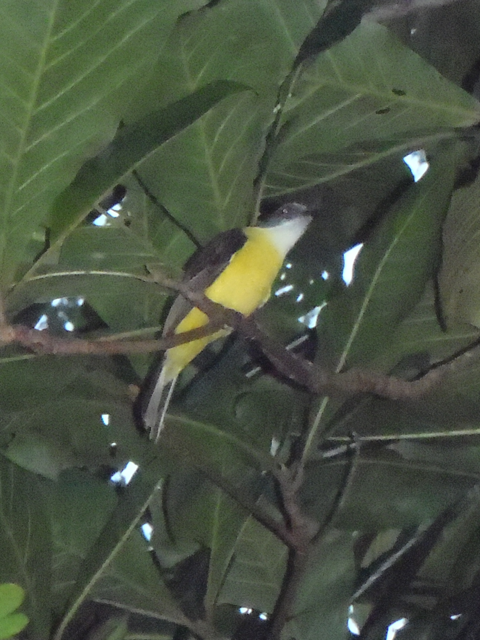
#118 Social flycatcher
Myiozetetes similis
IUCN Redlist: Least Concern
Location: Lake Catemaco, Veracruz, Mexico
Time: 1730 CST November 14, 2011
IUCN Redlist: Least Concern
Location: Lake Catemaco, Veracruz, Mexico
Time: 1730 CST November 14, 2011
Ruby-throated Hummingbird
Another female ruby-throated hummingbird, this time at Lake Catemaco, Veracruz. I've previously spotted this species at Monte Alban, Oaxaca, see the post here.
#117 Long-billed hermit
Phaethornis longirostris
IUCN Redlist: Least Concern
Location: Lake Catemaco, Veracruz, Mexico
Time: 1600 CST November 14, 2011
IUCN Redlist: Least Concern
Location: Lake Catemaco, Veracruz, Mexico
Time: 1600 CST November 14, 2011
#116 Great Kiskadee
Pitangus sulphuratus
IUCN Redlist: Least Concern
Location: Lake Catemaco, Veracruz, Mexico
Time: 1300 CST November 14, 2011
I've included this last photo because it clearly shows the bill, which is too slender for it to be a boat-billed flycatcher, with which it might otherwise be confused:
IUCN Redlist: Least Concern
Location: Lake Catemaco, Veracruz, Mexico
Time: 1300 CST November 14, 2011
I've included this last photo because it clearly shows the bill, which is too slender for it to be a boat-billed flycatcher, with which it might otherwise be confused:
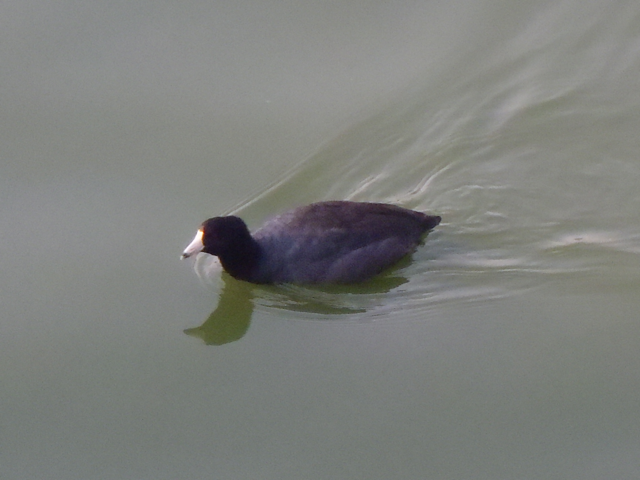
#115 American Coot
Fulica americana
IUCN Redlist: Least Concern
Location: Lake Catemaco
Time: 1240 CST November 14, 2011
IUCN Redlist: Least Concern
Location: Lake Catemaco
Time: 1240 CST November 14, 2011
#114 Brown Jay
Psilorhinus morio
IUCN Redlist: Least Concern
Location: Lake Catemaco, Veracruz, Mexico
Time: 1230 CST November 14, 2011
IUCN Redlist: Least Concern
Location: Lake Catemaco, Veracruz, Mexico
Time: 1230 CST November 14, 2011
#113 Tricoloured Heron
Egretta tricolor
IUCN Redlist: Least Concern
Location: Lake Catemaco, Veracruz, Mexico
Time: 1230 CST November 14, 2011
IUCN Redlist: Least Concern
Location: Lake Catemaco, Veracruz, Mexico
Time: 1230 CST November 14, 2011
Subscribe to:
Posts (Atom)